 Angličtina
 CN
CN 86-573-88890126
Ask ten print buyers to name the best size for a flex banner and you will likely hear ten different answers. That is not because the question has no answer, but because the honest answer is conditional. A banner that looks perfectly proportioned above a shop entrance will disappear on a highway fence, while a panel sized for a building facade would swallow a trade show booth whole.
Flex banner is manufactured on wide rolls, then cut, hemmed, and fitted with eyelets to order, so the dimensions you choose directly shape material yield, welding work, wind exposure, and final cost. This guide breaks the decision into the factors professionals weigh first: viewing distance, mounting location, application type, roll width, and finishing margins. None of these factors works alone, but each one narrows the field quickly. Work through them in order and the right size usually announces itself.
Why Banner Size Is a Budget Decision, Not a Guess
Size quietly controls a banner budget. Substrate is priced by area, so stepping up from a 4 × 8 ft panel to a 6 × 12 ft panel more than doubles material cost before any ink is laid down. Larger formats also demand more labor: bigger support structures, more fixing points, longer installation time, and, in many municipalities, permits once a sign crosses a regulated dimension.
Size also decides whether the message is read at all. Legibility collapses once letter height falls below what a viewer can resolve at a given distance, which is why artwork that looks sharp on a monitor can fail completely on a pole. Experienced buyers therefore fix the size first and design second, because every downstream choice, from artwork scale to hardware, hangs on that number.
Standard Flex Banner Sizes and Where They Work Best
Most print shops work from a compact set of proven dimensions because they fit common mounting points, match standard hardware, and use roll material with minimal waste. The table below collects the formats that recur across signage work worldwide. Treat them as starting points rather than limits.
| Category | Common finished size | Metric equivalent | Typical placement |
|---|---|---|---|
| Small | 2 × 4 ft | 0.6 × 1.2 m | Indoor retail, door promotions |
| Medium | 3 × 6 ft | 1 × 2 m | Storefronts, community events |
| Large | 4 × 8 ft | 1.2 × 2.4 m | Building walls, site fences |
| Extra large | 6 × 12 ft | 2 × 4 m | Facades, roadside displays |
| Backdrop | 8 × 8 ft | 2.4 × 2.4 m | Step-and-repeat photo walls |
| Billboard class | 14 × 48 ft | 4.3 × 14.6 m | Bulletins welded from panels |
Finished Size vs. Visible Size
A stated size normally refers to the finished panel before hemming. Hems can consume 2 to 3 cm on each edge, so a banner listed as 3 × 6 ft often displays slightly smaller once eyelets, pole pockets, or webbing are added. Confirm whether quoted dimensions include finishing, and keep critical content well inside the safe area.
Between these anchors, almost any dimension is achievable. Modern coating and lamination lines run rolls from roughly 2 m to more than 5 m wide, so a single seamless panel covers most wall banners, and larger formats are assembled by welding narrower strips with slim overlapping seams.
Match the Size to the Viewing Distance
The most useful sizing rule links letter height to distance: allow roughly 1 inch of letter height for every 10 feet of viewing distance. A message read from a sidewalk 30 feet away needs letters about 3 inches tall; the same message aimed at traffic 300 feet out needs letters close to 2.5 feet tall. Once the required letter height is known, the panel size follows naturally.
Speed compresses reading time as well. Drivers at highway speed may hold a banner in sight for only four to six seconds, which is why roadside formats grow aggressively and copy is trimmed to seven words or fewer. Pedestrian zones, by contrast, welcome smaller, information-rich panels that people can study at leisure.
Height adds to distance. A banner mounted above a second-floor facade is effectively farther from the eye than its ground distance suggests, so add mounting height to walking distance when estimating the real viewing gap. When in doubt, size up one tier; undersized banners are the most common and least reversible sizing mistake.
How Material Roll Width Shapes What You Can Order
Flex banner is produced in fixed roll widths. Calendering and lamination lines commonly deliver material between about 2 m and 3.2 m wide, and wide-format lines push single sheets close to 5 m across. Choosing a finished height that fits inside an available roll width keeps the panel seamless: a 3 m tall banner, for example, can be cut from one strip of 3.2 m material with no mid-panel weld at all.
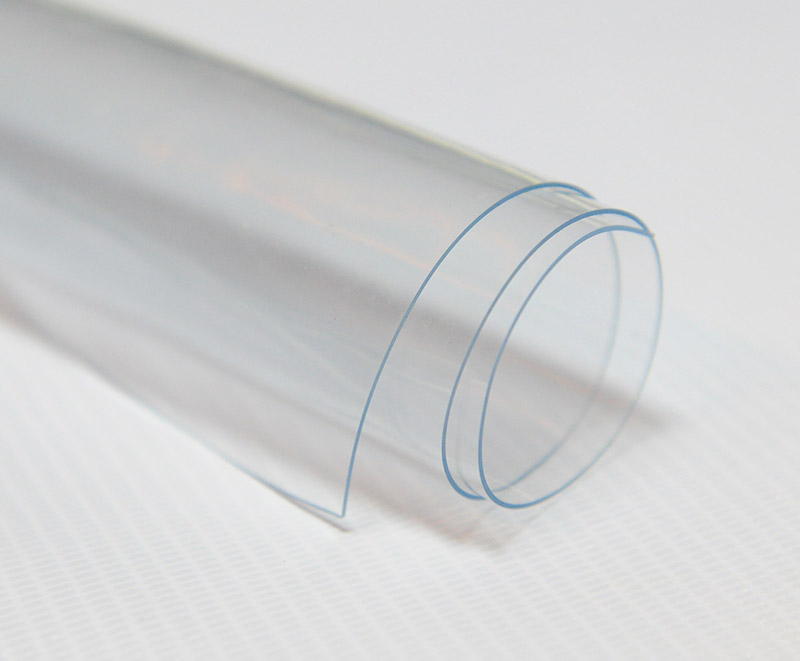
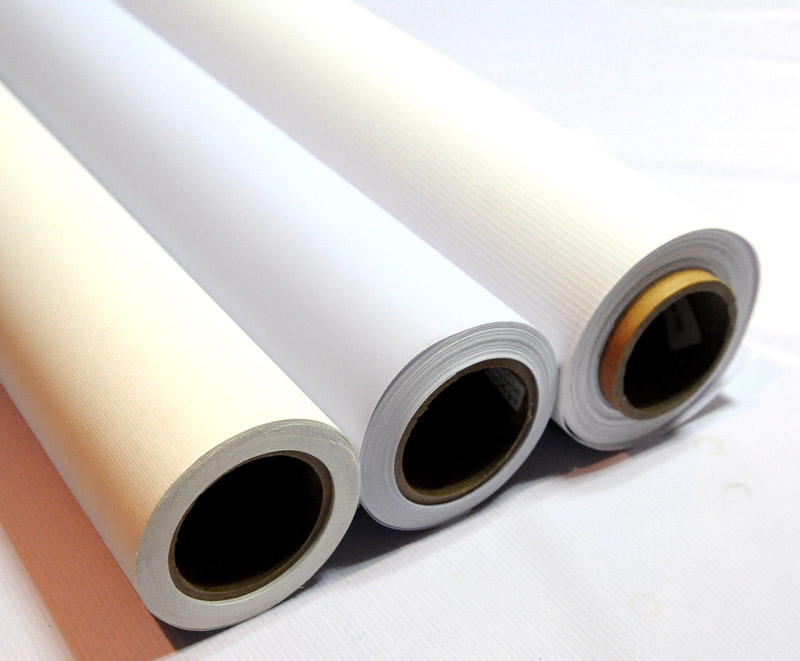
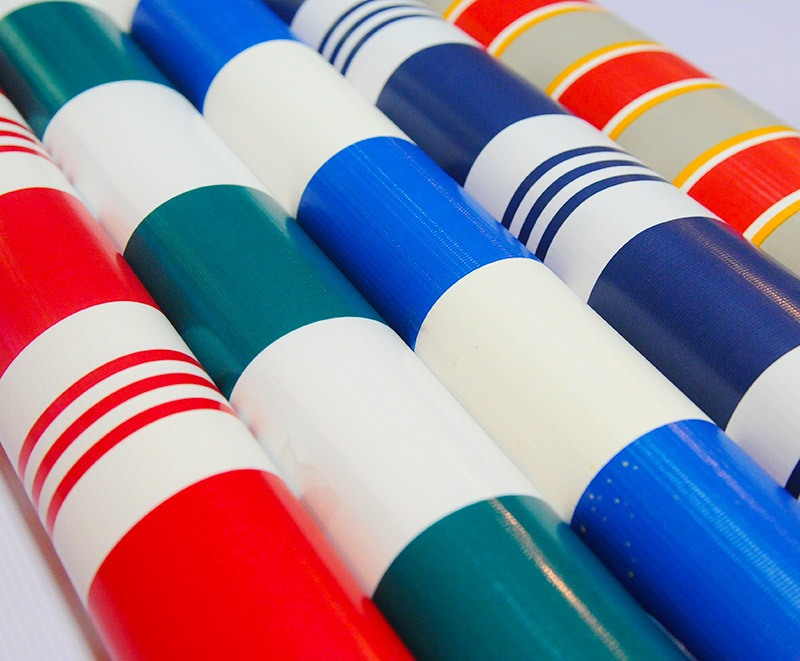
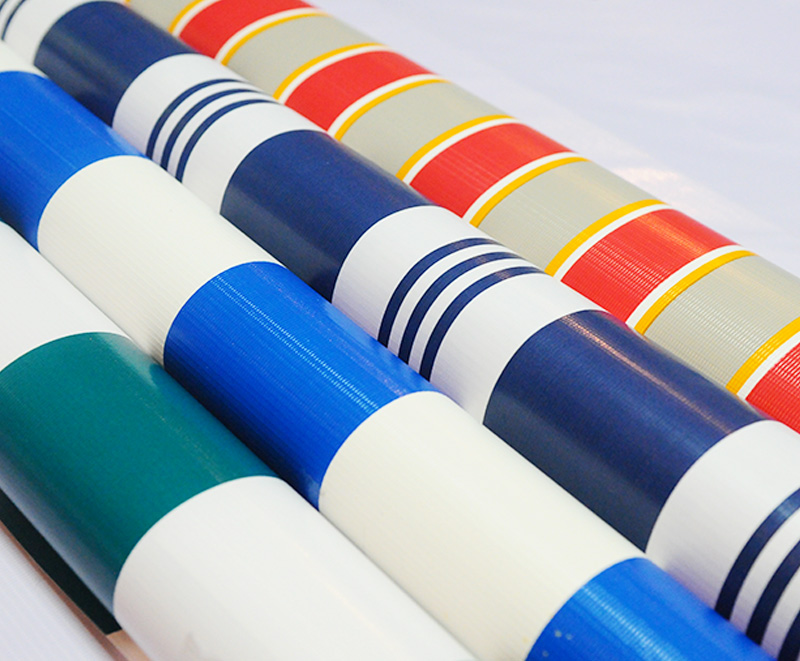
 Hot/Cold Laminated Frontlit & Backlit Flex BannerPrintable laminated PVC flex in matte or gloss finishes, 1.00-3.20 m wide, suited to UV, solvent, eco-solvent and screen printing. Roll widths up to 3.2 m let tall panels stay seamless without welded mid-panel seams.View Product →
Formats beyond a single roll width are built by welding strips together with 2 to 3 cm overlaps. Welded seams are strong, but they add visible lines and labor, so designers of oversized panels often align seams with the structural members of the supporting frame, letting the joints disappear into the construction.
Finishing margins deserve equal attention. Standard practice reserves about 5 cm on every edge for hems and eyelets, with fixing points spaced every 45 to 60 cm around the perimeter, and very large panels may specify reinforced webbing or rope hems instead of simple folded edges.
For installations that stay up for seasons rather than weeks, dimensions are only half of the specification. UV resistance is equally decisive for outdoor flex banner material, because a perfectly sized panel that fades early still fails the campaign it was built for.
Recommended Sizes by Application
Individual placements have settled on de facto standard sizes because hardware, frames, and viewing patterns favor them. The quick map below covers the placements that account for most flex banner volume.
Pole bannersStorefrontsBackdropsFencesFacadesBulletins
- Street pole banners: about 2.5 × 7 ft (0.76 × 2.1 m), printed on both faces and mounted with brackets.
- Storefront promotions: 3 × 6 ft or 4 × 8 ft, sized to the fascia above the entrance.
- Event backdrops: 8 × 8 ft step-and-repeat panels placed behind speakers and photo points.
- Fencing and scaffolding: modular panels matched to fence sections, frequently in breathable material.
- Building facades: 6 × 12 ft up to 10 × 20 ft, engineered around the wall structure.
- Billboard-class bulletins: 14 × 48 ft assemblies welded from several panels.
Double-Sided and Hanging Formats
Banners hung where both faces are visible, such as pole mounts and ceiling-hung mall displays, benefit from a blockout layer between two printable faces. Without it, sunlight or gallery lighting pushes the reverse image through the panel and muddies both sides of the message at once.
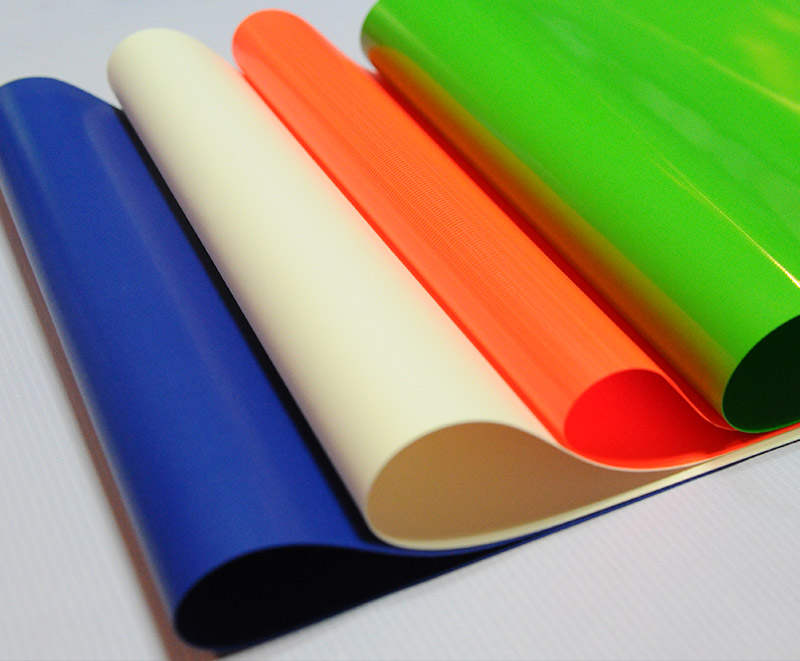
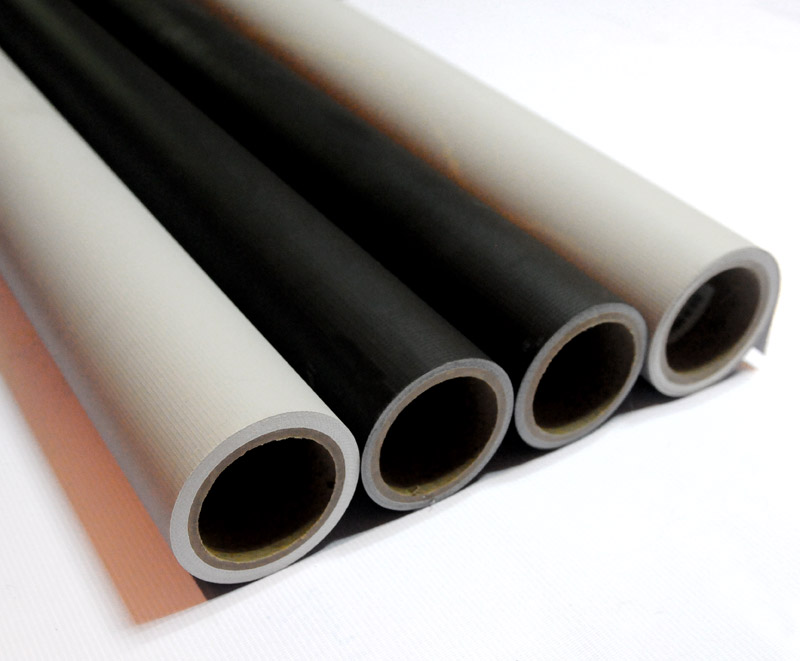
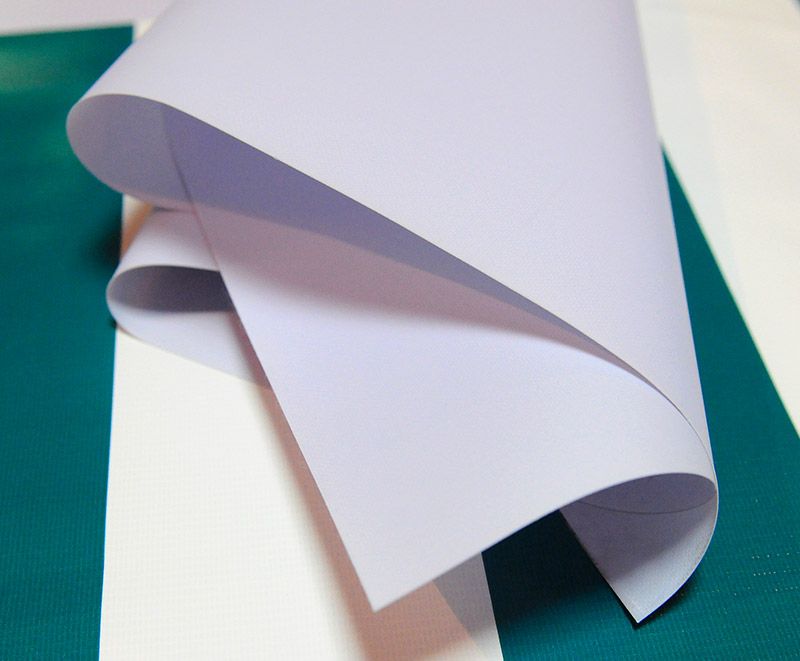 PVC Blockout Flex Banner Roll MaterialDouble-sided printable blockout flex with a light-blocking layer that prevents reverse images showing through. A practical choice for pole banners and ceiling-hung displays viewed from both sides, with good fade resistance.View Product →
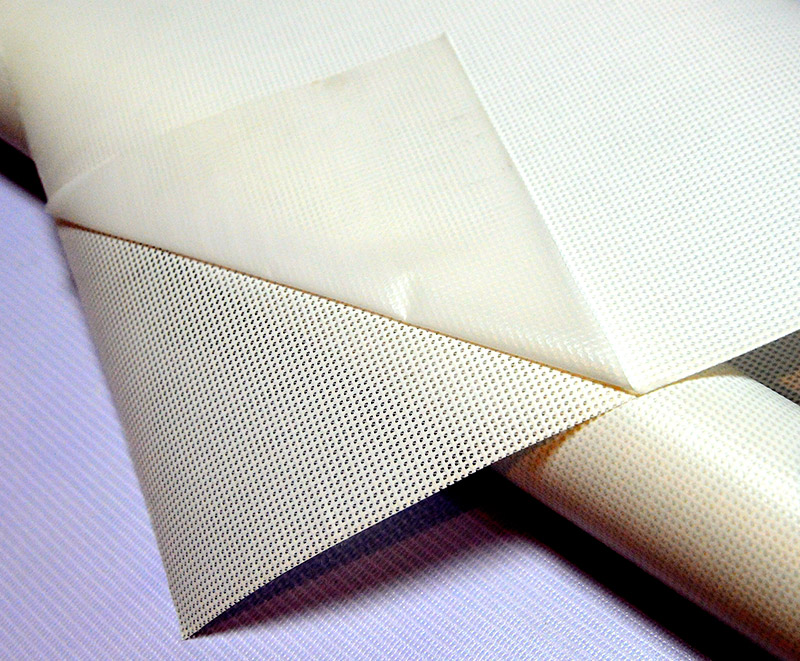
Glass fronts follow different logic: perforated films rather than hanging panels. A one-way vision vinyl film carries full-color graphics on the exterior while preserving the view from inside, and it is measured to the glass module rather than to a structural frame.
Wind Load: The Size Factor Buyers Overlook
Area multiplies force. Doubling both dimensions of a banner quadruples the surface the wind can push, and that load concentrates at the weakest fixing points. A modest street banner can tear out its eyelets in a gust that a framed structure barely notices, which is why size and fixing design must be decided together rather than in sequence.
For open fences, scaffolding, and exposed facades, many installers move to breathable mesh. Air passes through the print surface, cutting the strain on every fixing while the image stays readable, at a modest trade-off in print density. Solid panels in exposed positions should carry extra eyelets, corner reinforcement patches, and shorter spans between fixing points.
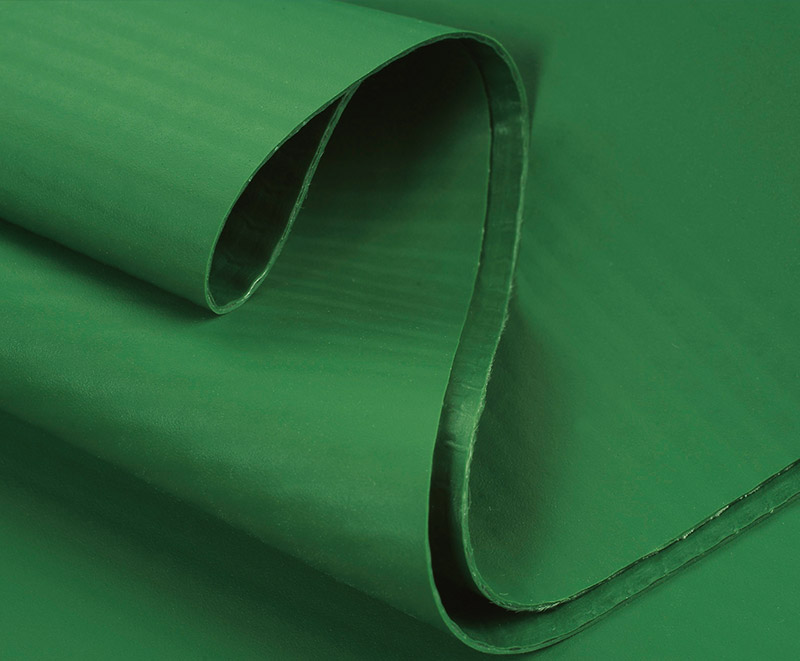
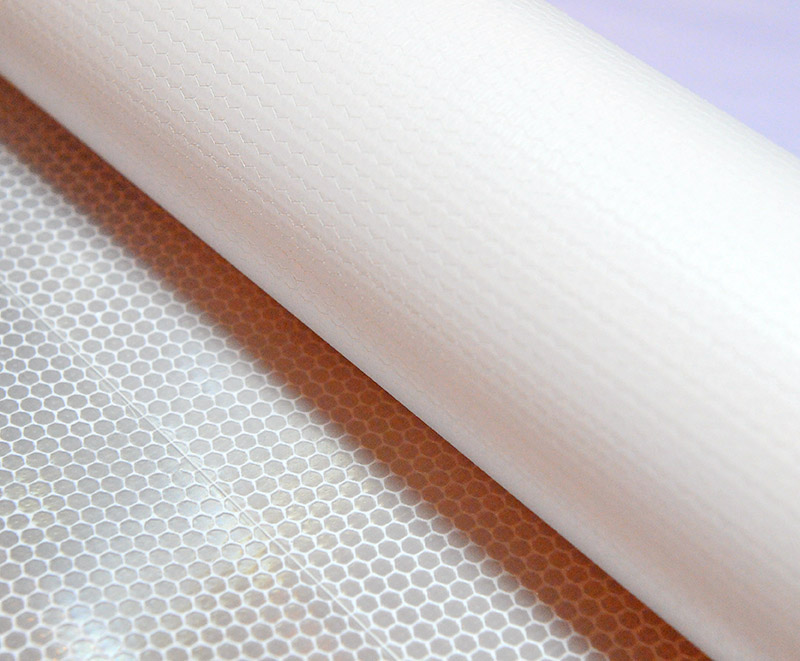
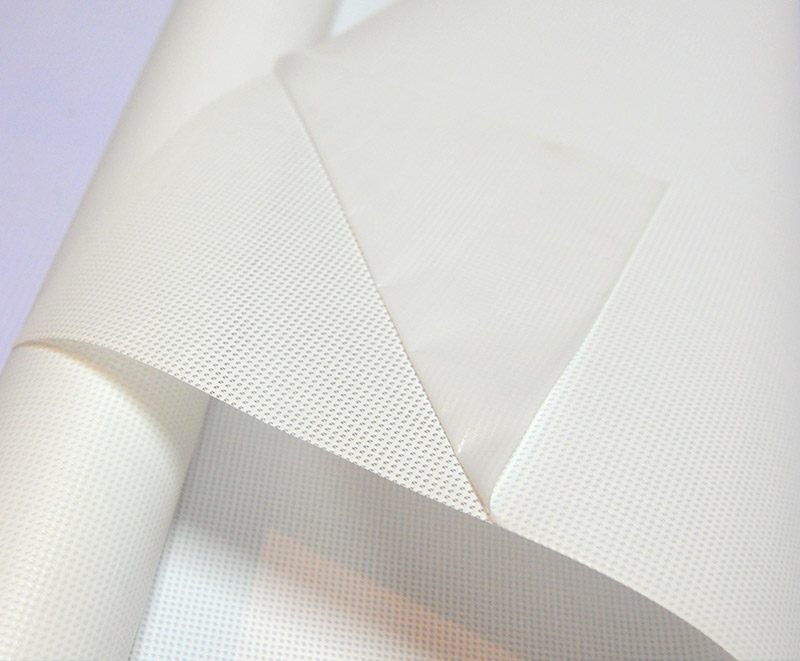 PVC Liner Mesh Banner Material RollBreathable mesh banner material with PVC liner that lets wind pass through the print surface, reducing strain on fixings on fences, scaffolding and exposed facades while keeping graphics readable.View Product →
Regulation closes the loop. Many cities cap banner dimensions by zone, and structures above a certain area need engineering sign-off, so verifying local rules before ordering prevents the costly discovery that a finished banner cannot legally be hung where planned.
Artwork Setup: Resolution at Final Size
Once the size is fixed, artwork should be built to that size or to a stated scale of it. As working ranges, close-viewed banners print well at 100 to 150 dpi at final size; medium panels work at 50 to 100 dpi; billboard-class formats are routinely produced at 15 to 30 dpi because nobody stands directly in front of them. Supply raster images at the effective resolution after scaling, and keep logos and type as vector objects so they stay crisp at any size.
Specify color in CMYK, add a 5 cm bleed beyond the trim line, and keep all critical content clear of hem zones. Files supplied at final size with correct margins eliminate the most common cause of reprints: strong artwork cropped by a hem nobody budgeted for.
Pre-Order Checklist for Any Banner Size
Run this list before any purchase order is signed.
- Measure the mounting surface, including structural openings and fixing positions.
- Estimate the true viewing distance, adding mounting height where relevant.
- Convert distance into minimum letter height, then into a panel size.
- Check local signage rules for maximum dimensions in the zone.
- Match panel dimensions to available roll widths to minimize seams.
- Reserve about 5 cm per edge for finishing and space eyelets every 45 to 60 cm.
- Confirm artwork resolution at final size, with bleed outside the safe area.
Frequently Asked Questions
Q1: What is the most commonly ordered flex banner size?
For general outdoor advertising, 3 × 6 ft and 4 × 8 ft panels dominate order volumes because they suit storefronts, fences, and event walls, while the 8 × 8 ft square is the near-universal choice for photo backdrops and step-and-repeat walls.
Q2: How large can a single-piece flex banner be without seams?
It depends on the production line. Many manufacturers can supply seamless panels roughly 3 to 5 m wide, so most wall banners are produced as one piece. Anything larger is welded from narrower strips, usually with 2 to 3 cm overlaps at each joint.
Q3: Does a bigger banner cost more per square meter?
The base substrate price is broadly uniform per square meter, but very large formats add welding labor, reinforced hems, stronger support structures, and sometimes engineering sign-off, all of which raise the effective cost of the finished piece beyond simple area pricing.
Q4: What size works best in windy locations?
Smaller panels with reinforced hems and closely spaced eyelets, or breathable mesh material for exposed fences and high facades. Size and fixing design should be planned together, and local wind-load rules always take priority over design preferences.
Q5: How much margin should artwork keep away from the edges?
Plan on at least 5 cm from every edge. Hems and pockets consume 2 to 3 cm per side, and eyelets sit inside that zone, so any text placed closer risks being covered, folded, or punctured by finishing hardware.
Q6: Should I design at final size or at a scaled-down version?
Either is acceptable as long as the scale factor is stated and the effective resolution lands in the workable range at final size, from roughly 150 dpi for close viewing down to 15 to 30 dpi for distant billboard-class formats.